What's a flop house? And what does the famously provocative 1928 'ThreePenny Opera' got to do with it? Why is the timing of this world premiere cabaret significant now?
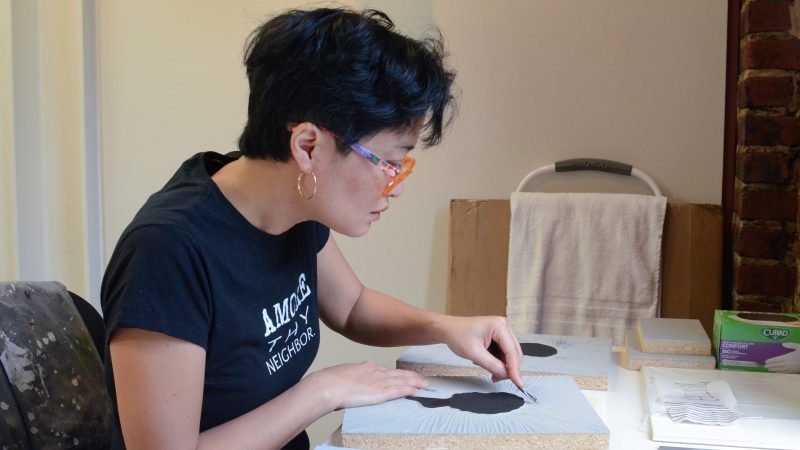
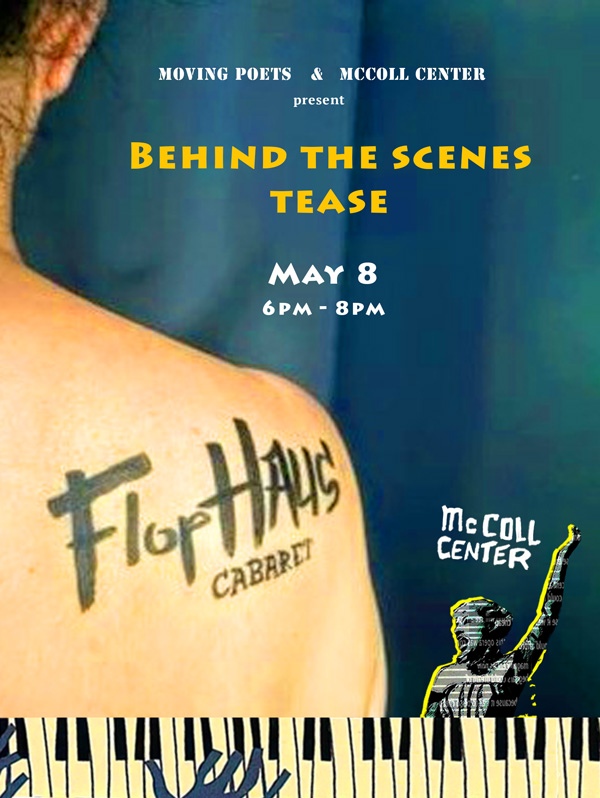
Why does the work of the critically acclaimed artistic trio Kurt Weill, Lotte Lenya and Bertolt Brecht, who impacted music and theatre from Berlin to Broadway - and stood up to the fascist movements of their time, still resonates today? Be the first to see the in-progress costumes created in the McColl Center on-site print lab. Meet the artists behind the Moving Poets and McColl Center collaboration. See sneak peak performances of the multi media production featuring dancers, actors, singers and live music. be curious. be there.
Info about the show: FlopHAUS Cabaret, Ballads of A Dark Horse is an edgy, cabaret style social satire. It is inspired by the famously provocative 'ThreePenny Opera' and the legendary Kurt Weill, Lotte Lenya and Bertolt Brecht. Defiantly sharp as Mack the Knife's blade, this raw dark comedy includes nineteen original and contemporary adaptations of Weill's works such as 'Pimp Ballad’, 'Moon of Alabama', ' Je ne t'aime pas', and ‘Pirate Jenny’. In the tradition of the witty yet politically dissonant 'ThreePenny Opera', FlopHAUSCabaret not only entertains, but cunningly challenges hypocrisy, corruption and moral ambiguity in society, with a sharp sense of humor and a wink and nod “Happy End”.
Expressed through theater, dance, jazz and opera, this multi-media music production is performed by over 35 national, regional and Charlotte-based actors, dancers, musicians, and singers. For the FlopHAUS Cabaret the McColl Center will be turned into a two-stage cabaret theater/club, traveling through time from 1925 until today, making use of the unique visuals and atmosphere the building has to offer.
June 17-20, Wednesday – Saturday 7:30pm. House opens at 7pm.
Intended for mature audiences.
Presented by Moving Poets in collaboration with McColl Center.
FlopHAUS Cabaret is inspired by the life and works of composer Kurt Weill, his wife and singer/performer Lotte Lenya and plays by playwright/poet Berthold Brecht.
They achieved major international acclaim first in Germany, and after escaping the Nazis, also in France and especially the USA. Several of their works like the 'Three Penny Opera', are still regularly produced throughout the world.
The song "Pirate Jenny", based on a poor maid's dream of liberation and vengeance against her oppressors, was made famous by many notable singers, including Nina Simone, who poignantly changed the story’s location to a flophouse in the South. Written by Brecht and Weill for the "Three Penny Opera", it reflected social, political, gender and class tensions of the time, which also inspired new works like Bob Dylan's 'When The Ship Comes In' and renditions of 'Alabama Song (Whiskey Bar)' by The Doors and David Bowie.
While moving from the 1920s to 2026, FlopHAUS Cabaret touches on the unlikely rise of Lotte Lenya and her relationship with Kurt Weill. Lenya came from a deeply poor working class background. Her alcoholic and abusive father was a coachman, her mother kept the family afloat working as a dishwasher and maid. As a teenager Lenya was moved by her mother and an aunt out of her home to another country. There she used every chance to develop a love of dance, theatre and music - while doing what it took to survive - and eventually met the rising star, upper class composer Kurt Weill. Both were deeply intrigued by each other and began a lifelong partnership in work and marriage, that lasted through numerous hardships and successes. Weill dropped composing music for elites and instead focused together with Lenya on creating new work, that spoke to and told stories of those with little power, women and the working class.